What If Every Borrower Interaction Built on the Last?
Team Auron

Farm Credit relationship managers learn valuable insights during every borrower interaction. FRIP helps capture that field intelligence, connect it with existing borrower context, and turn it into useful follow-ups, continuity, and action across the organization.
What If Every Borrower Interaction Built on the Last?
Consider an illustrative family-owned row-crop operation during spring planting. The operator mentions that their daughter plans to return to the farm, additional grain storage is becoming a serious consideration, and equipment needs may come back into focus before the next operating-line renewal.
Nothing necessarily requires an immediate transaction.
But the relationship has changed.
The relationship manager now knows something that could shape the next conversation, a future financing discussion, an internal handoff, or the way another officer approaches the relationship months from now. FRIP is designed to keep that intelligence useful after the conversation ends.
What Is FRIP?
FRIP, or Farm Relationship Intelligence Platform, is Auron’s relationship-intelligence layer for Farm Credit. It captures what relationship managers learn through borrower interactions, connects that field knowledge with existing relationship context, preserves it as responsibilities change, and turns relevant intelligence into follow-ups, handoffs, and preparation for what comes next.
It works alongside the systems Farm Credit organizations already rely on rather than replacing them.
Its operating model is simple:
Capture → Continuity → Conversion
Capture what the field learns. Keep that intelligence available across conversations and people. Convert useful context into work that keeps the relationship moving.
What Are the Main FRIP Use Cases?
FRIP becomes useful across several recurring moments in Farm Credit relationship work:
Preparing for the next borrower visit
- Capturing intelligence after the interaction
- Connecting new context with existing borrower knowledge
- Turning field intelligence into follow-ups and handoffs
- Preserving context when relationship ownership changes
- Preparing the next relationship manager
- Giving leaders visibility into relevant relationship patterns
- Building organizational intelligence from field knowledge
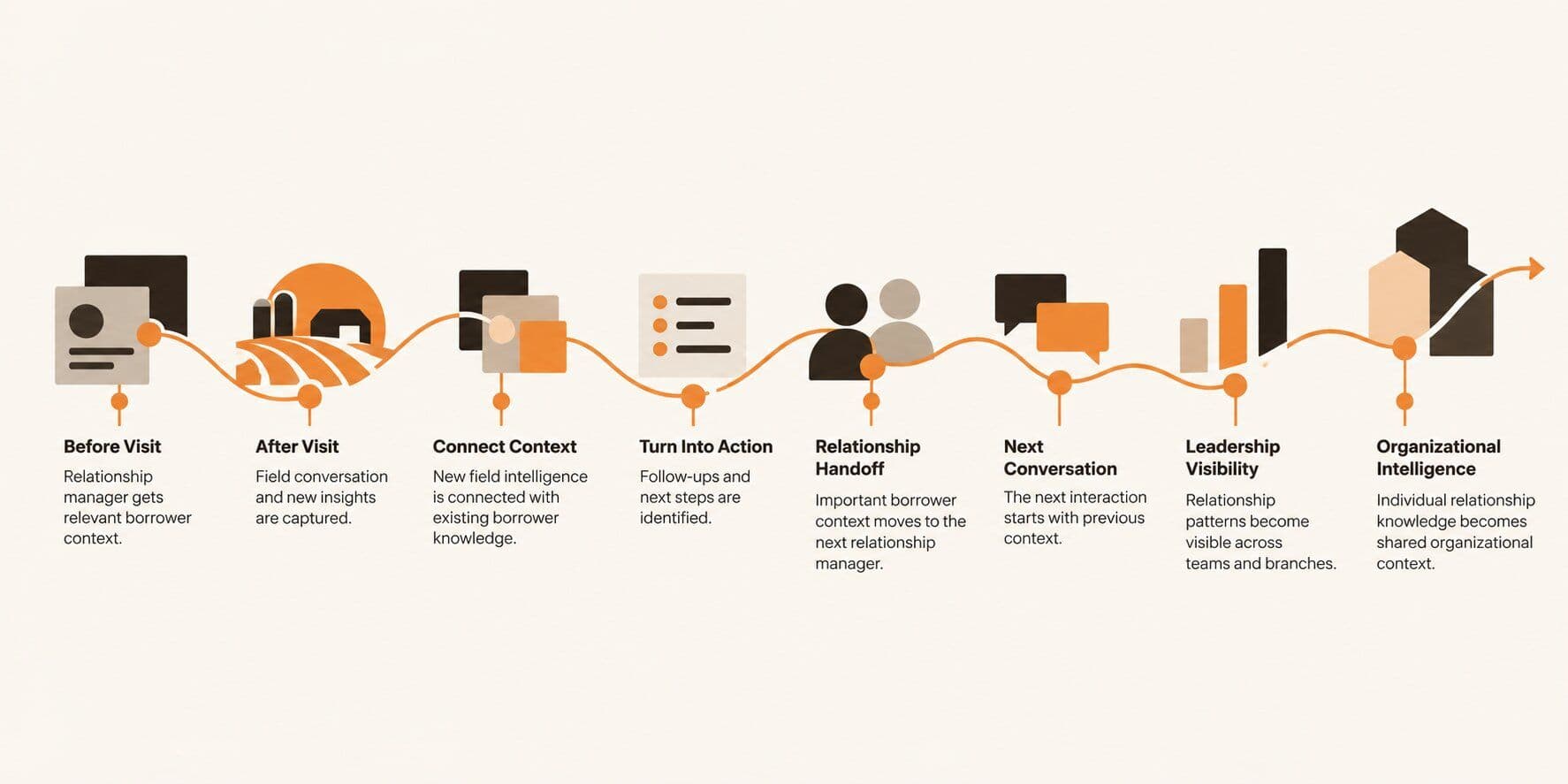
To see how those moments connect, follow the same borrower relationship from spring planting through the conversations that come next.
Before the Visit: Start with the Relationship
FRIP brings relevant relationship context forward before the officer walks into the next conversation.
The formal borrower record already provides important information about the account, products, acreage, financing history, and renewal timing. Relationship intelligence adds what has developed around that record: earlier equipment conversations, open commitments, succession discussions, expansion plans, or priorities that are still taking shape.
The record tells you the acreage. The relationship manager knows which field the family wants to expand into next.
That difference matters.
Useful preparation is not about placing more information in front of a relationship manager. It is about bringing forward the context that matters for this borrower at this moment.
Before the next visit, that might mean knowing about recent conversations, open follow-ups, operational changes, upcoming renewals, equipment plans, family transitions, or topics the borrower was not yet ready to act on.
The goal is simple: begin the next conversation from what the relationship has already learned.
After the Visit: Capture What the Officer Learned
FRIP captures new field intelligence while the interaction is still fresh.
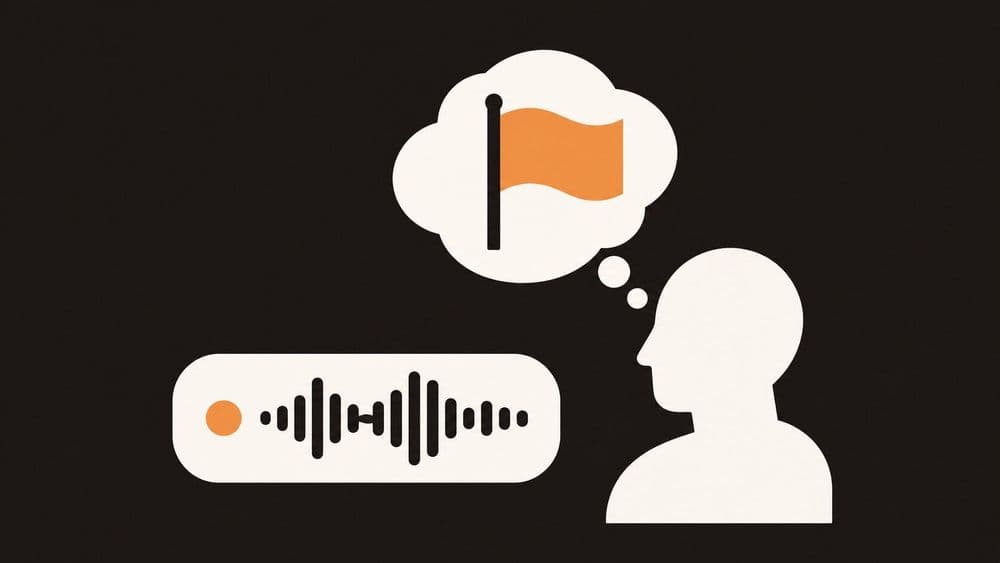
Back at the truck, the relationship manager can provide a short voice debrief. The daughter is returning to the operation. Grain storage has moved from a passing idea to serious consideration. Equipment requirements may become more important before the operating-line renewal.
This is different from simply transcribing a conversation.
The relationship manager supplies the judgment about what matters. FRIP structures what the officer learned, observed, and interpreted rather than relying on a transcript alone to decide what is important.
A useful field debrief can capture:
- What changed since the previous interaction
- What the borrower is considering
- Who is becoming involved in decisions
- What the relationship manager observed
- What commitments were made
- What deserves follow-up
The objective is not more documentation.
It is to keep useful relationship intelligence from ending when the field visit does.
Connect New Context with Existing Knowledge
FRIP connects what was learned today with what the organization already knows about the borrower.
The grain-storage discussion becomes more useful when seen alongside previous capital plans, equipment conversations, the current operating relationship, renewal timing, and the daughter’s growing involvement in the operation.
That is where context becomes different from another note.
Structured systems continue to hold the borrower and account information the institution relies on. FRIP adds the qualitative intelligence created through conversations and field experience.
This principle is increasingly important as organizations deploy AI. Gartner’s 2026 research on AI context platforms describes reusable context as a first-class enterprise asset, reinforcing the importance of connecting AI with the history and meaning around enterprise information.
Read Gartner’s AI context research
For Farm Credit, the idea is practical.
Data tells the organization what exists. Relationship intelligence helps explain how the people, conversations, plans, and timing fit together.
Turn Field Intelligence Into Action
FRIP moves relationship intelligence beyond capture and into the work that follows.
Suppose the storage conversation becomes more serious. FRIP can turn that context into a follow-up with an owner, bring an upcoming financing need back into view at the appropriate time, route relevant context to another internal team, or prepare borrower communication for the relationship manager to review.
That is Conversion.
The intelligence does not have to sit inside a note waiting for someone to remember it. It can become part of the workflow between one borrower's conversation and the next.
A future equipment discussion remains connected to the field of conversation that surfaced with it. Relevant information can travel with an internal handoff. The next interaction can be prepared using what the officer has already learned.
The relationship manager still owns the relationship and the judgment around it. FRIP helps carry more of the connective work in between.
McKinsey reported in 2026 that commercial relationship directors at UK and European incumbent banks spend an estimated 65 to 75 percent of their time on non-sales activity. In relationship-management workflows redesigned end to end with AI agents, banks observed 10 to 12 hours of weekly capacity returned to each banker. These are banking benchmarks rather than FRIP outcomes, but they illustrate why workflow participation matters more than simply producing another AI-generated summary.
Read McKinsey’s banking research
For FRIP, the intended outcome is broader relationship coverage with better continuity: follow-through remains closer to the conversation that created it, relevant context reaches the people who need it, and fewer important details have to be reconstructed later.
When the Relationship Changes Hands
FRIP keeps relevant borrower context with the relationship when responsibility changes.
Now imagine the territory changes before harvesting.
The formal account record transfers. But the new relationship manager also needs to understand that the daughter is becoming involved; storage remains under consideration, equipment requirements may be approaching, and earlier conversations have already shaped expectations.
That is the harder part of a handoff.
A record can be transferred. Relationship context also needs continuity.
A useful handoff should answer five questions:
- What did the previous relationship manager learn?
- What has changed recently?
- Which decisions are beginning to take shape?
- Which follow-ups remain open?
- What should the next conversation address?
The incoming officer still has to build trust and apply their own judgment. FRIP changes the starting point by making more of the institution’s existing relationship knowledge available.
The organization does not have to relearn what it already knew.
For a deeper look at this challenge, read Auron’s perspective on knowledge retention in agricultural lending.
Prepare the Next Relationship Manager for the Conversation
Continuity becomes meaningful when that retained context improves what happens next.
By harvest, grain storage may have moved from consideration to planning. The daughter may now be actively involved in decisions. Equipment requirements may be clearer.
A new relationship manager does not need to pretend they were part of the previous conversations. They also should not need to ask the borrower to reconstruct everything the institution has already learned.
Relevant context is already available.
This is where Capture → Continuity → Conversion begins to compound. What one officer learns in spring can still make the relationship more informed when another officer sits down with the borrower months later.
Give Leadership Visibility Into Relationship Patterns
FRIP also makes relevant themes visible beyond an individual borrower relationship.
Across a territory or portfolio, relationship teams may be hearing more conversations about succession, equipment, grain storage, land, expansion, price pressure, or changes in who is making decisions on the farm.
The objective is not to monitor relationship managers.
It is to help lending and executive leaders understand patterns emerging across borrower relationships using intelligence already being created through normal field work. That visibility can help leaders support their teams, identify where additional expertise may be useful, and understand what is developing across the book.
It creates an important shift:
From “the relationship manager knows this” to “the organization can use this.”
Build Organizational Intelligence
FRIP turns individual relationship knowledge into an asset that can remain useful across people and time.
The grain-storage discussion began as one detail from a spring field visit. It became captured context, a follow-up, part of the continuing borrower picture, preparation for another relationship manager, and eventually one signal within the broader intelligence available to the organization.
That is the larger opportunity.
Intelligence was already being created in the field. FRIP makes more of it connected, persistent, and usable.
For a relationship-driven institution, that means the ability to support a broader book of relationships without stripping away the context that makes those relationships personal.
For readers interested in the broader agentic-AI model behind this approach, read Auron’s perspective on Agentic Farm Credit.
FRIP and Your CRM Work Together
FRIP is not a replacement for the CRM or the lending systems Farm Credit organizations already use.
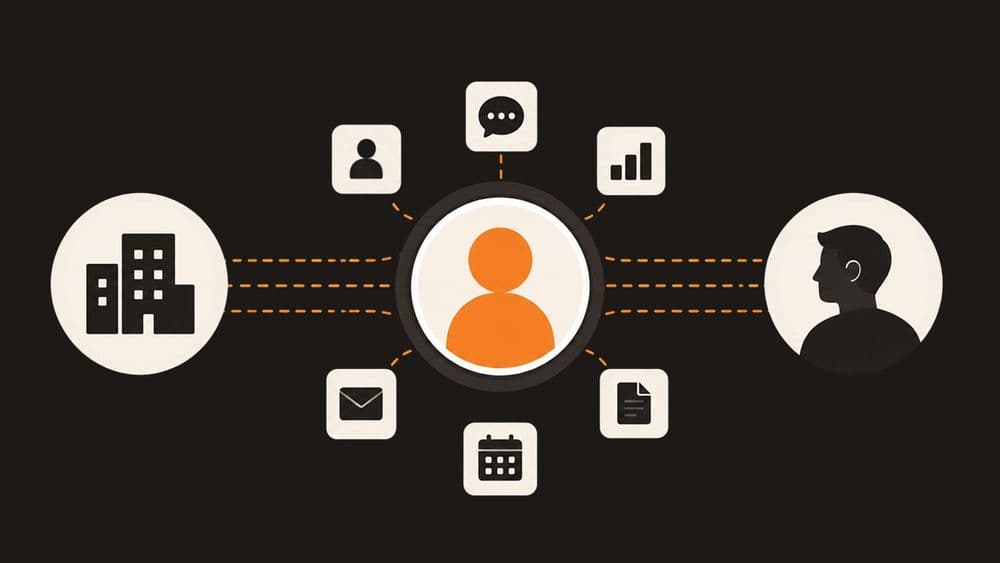
The CRM remains in the system of record for structured borrower and account information. FRIP adds a relationship-intelligence layer around it, capturing the context, observations, and professional judgment created through borrower interactions.
The two systems have different jobs.
The CRM records the relationship. FRIP preserves more of what the organization learns through it.
That distinction allows Farm Credit organizations to build their existing technology investments instead of creating another rip-and-replace initiative.
See What FRIP Could Look Like in Your Organization
Farm Credit organizations already create valuable intelligence through field visits, operating-line conversations, succession planning, land decisions, equipment needs, expansion plans, and years of relationship building.
Auron built FRIP to help more of that intelligence move with the relationship through Capture → Continuity → Conversion.
The opportunity is not to collect more information simply because AI makes that possible. It is to make the knowledge already being created through borrower relationships more useful across conversations, teams, and time.
The record shows where the relationship has been. FRIP helps carry what the organization has learned into where the relationship goes next.
Frequently asked questions
What does FRIP stand for?
FRIP stands for Farm Relationship Intelligence Platform. It captures qualitative intelligence from borrower interactions and connects that knowledge with the broader relationship context already available to the organization.
What are the main FRIP use cases?
FRIP supports borrower-visit preparation, field-intelligence capture, relationship-context building, follow-ups, internal handoffs, relationship continuity, future preparation, leadership visibility, and organizational intelligence.
How is FRIP different from voice transcription?
Voice transcription records what was said. FRIP is designed around what the relationship manager learned, observed, and interpreted, then connects that intelligence with the continuing borrower relationship and the work that follows.
Does FRIP replace CRM?
No. CRM and lending systems continue to serve their existing roles. FRIP works alongside them as a relationship-intelligence layer for the qualitative context generated through borrower conversations and field interactions.
What happens when a relationship manager changes?
FRIP keeps relevant borrower context available through territory changes, reassignments, and changes in relationship ownership. The incoming relationship manager can begin with knowledge already held by the institution rather than reconstructing the relationship history from the beginning.
Who uses FRIP?
FRIP is relevant to relationship managers, lending and branch leaders, technology teams, innovation leaders, and executives. Relationship managers use it around individual borrower interactions, while leadership can use aggregated relationship intelligence to understand relevant themes across a portfolio or territory.
How is borrower information governed?
FRIP is designed to align with each Farm Credit organization’s security, privacy, access, and technology requirements. Governance, controls, and integrations are defined as part of the institution’s implementation approach.